Information for community and stakeholders
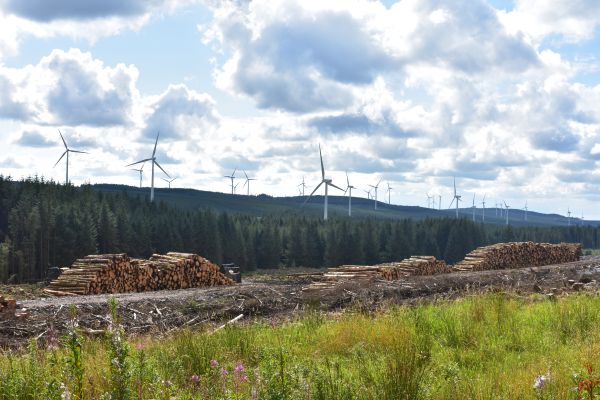
Wind energy in State forest softwood plantations
Renewable energy is key to achieving the NSW Government’s commitment to Net Zero emissions by 2050.
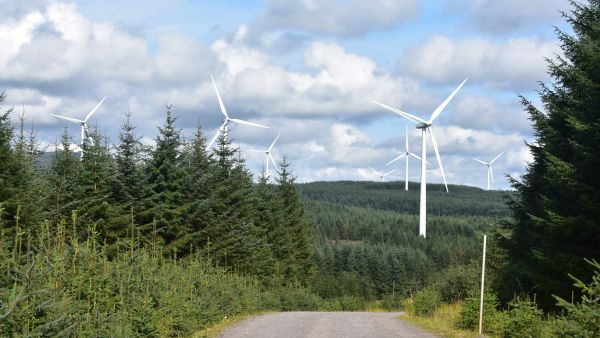
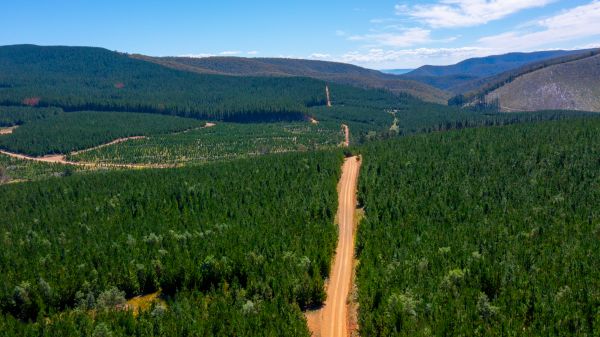
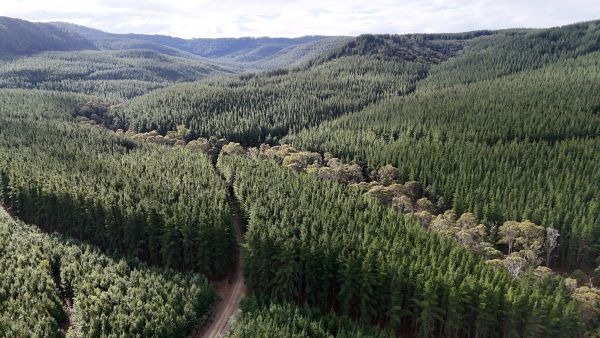
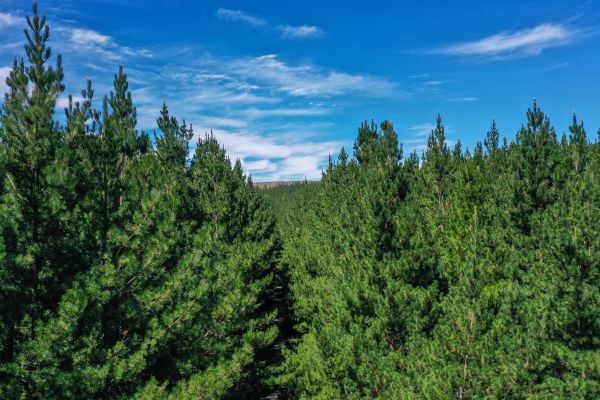
Pine plantations offer a unique opportunity for new renewable energy infrastructure to be located on public land that:
- has existing roads and access to transmission infrastructure
- is located in windy areas
- offers large contiguous tracts of land for strings of turbines
- is located away from residential areas — minimising impacts to communities.
Renewable energy is already being produced alongside renewable timber in pine plantations overseas, and there are now investigations underway to explore opportunities in NSW.
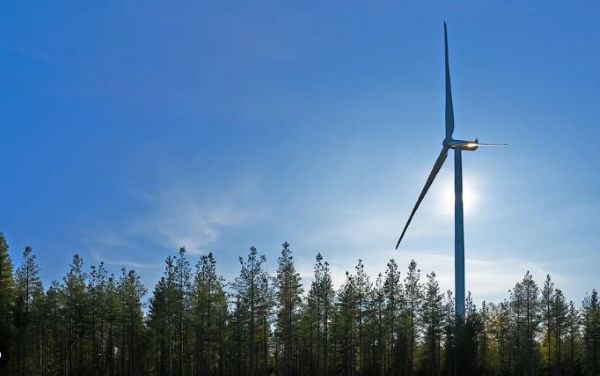
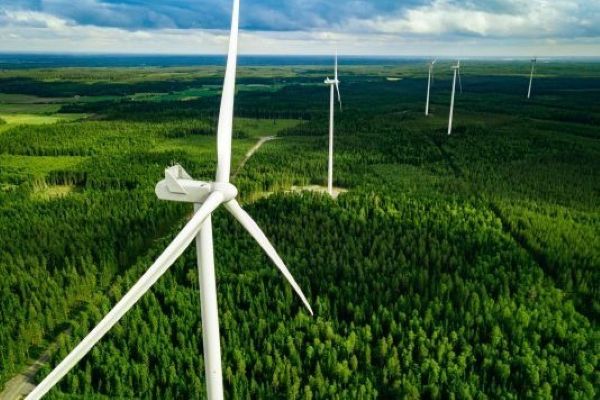
Wind farms can be co-located in plantation forests without having long-term impacts on tree growth or plantation operations, as they sit above the tree canopy.
A 150MW wind farm can power around 60,000 – 65,000 homes, saving 360,000 tonnes of greenhouse gas emissions annually. Larger wind farms (500MW) could power up to 200,000 homes – reducing 1.3million tonnes of greenhouse gas emissions annually. See the NSW Wind Farms and Greenhouse Gas Savings brochure here.
Investigations are currently underway in the Sunny Corner, Tumut, Orange and Black Springs areas. See the project websites for more details.
No wind farms have been approved for construction or operation in State forest pine plantations.
Companies have permits that authorise them to consult with communities, conduct technical and environmental studies and the assessments needed to seek planning approval.
To have their wind farm proposal approved, they must apply for approval in line with the NSW Government’s Renewable Energy Planning Framework.
Under the Forestry Act, a maximum of 0.7% of pine plantation land can be used for renewable energy projects. That means the total maximum allowable area for construction and operation of renewable energy infrastructure across all permits is approximately 1,672 hectares. There are no other projects under investigation.
Managing and mitigating fire risk
Forestry Corporation is a statutory fire fighting authority in NSW.
Fire mitigation and management strategies are an important requirement when considering all activities in forests, including potential renewable energy projects in pine plantations.
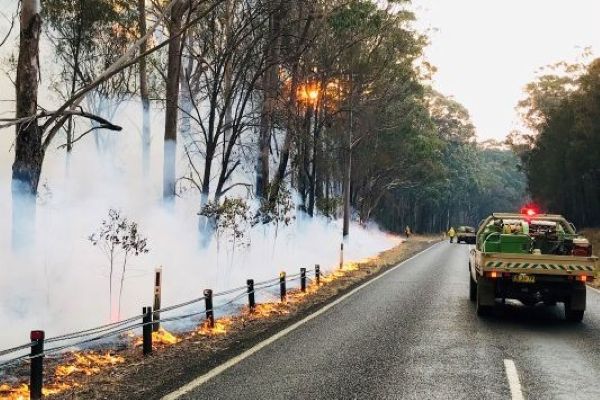
Over the last 33 years, lightning has been the leading cause of fire identified in pine plantations in NSW. Lightning strikes are frequent around elevated regions and can start fire if they strike flammable objects.
For this reason, Forestry Corporation has a network of fire towers and smoke detection cameras to continually monitor the estate for new ignitions, and employs more than 550 trained firefighters who are equipped to rapidly deploy to new fires.
Proponents must also complete a fire management plan to identify any risks and determine strategies to mitigate them.
Fire risk mitigation measures will include, but not be limited to:
- a gravel base surrounding each turbine, which is a fuel-free asset protection zone which reduces the risk of ignitions
- monitoring and surveillance systems for turbines will have 24 hours a day, 365 days a year Remote shutdown systems for turbines
- automatic fire suppression systems
- requirements for project proponents to train and retain their own firefighting workforce to protect their assets and surrounding vegetation.
Projects are still in the investigation phase and no projects are approved for construction.
As a firefighting authority, Forestry Corporation actively responds to fire on its estate in collaboration with the other fire authorities. All fire authorities work closely together to plan, mitigate and respond to fires and communicate about fires in the landscape on an ongoing basis.
Projects are still in the investigation phase and no projects are approved for construction.
Meteorological masts have been installed in some locations to gather data to inform investigations. Locations have been shared with peak aviation bodies, other fire authorities and aircraft contractors to ensure they are planned for in aerial firefighting. Click here for maps showing aerial obstructions.
Local communities and forest users
Wind projects in pine plantations are just proposals this stage, and community consultation is an important part of the investigation process.
Permit holders are actively engaging with local communities as they consider potential project design and community benefit sharing opportunities.
To provide input into a specific project, contact the permit holder directly:
Investigation permit holders must consult with First Nations communities.
Forestry Corporation has also engaged with Aboriginal communities to understand cultural values of these areas and how local Aboriginal communities would like to be engaged in the investigation process.
Projects are still in the planning phase and permit holders are working with neighbours and communities close to their proposed projects to gain feedback which will inform positioning of wind turbines.
We encourage you to reach out to the project proponent directly for the details of their proposed project and to provide feedback.
As part of the planning process, permit holders will conduct visual impact assessments and planning to ensure they comply with setback requirements in the NSW Government’s Wind Energy Guideline.
Renewable energy developments can bring a range of social and economic benefits to the communities they operate in, including economic growth, regional investment, upgrades to roads and infrastructure, community sponsorships and opportunities for local suppliers and businesses.
The NSW Government’s Benefit Sharing Guideline provides information on the kinds of opportunities available to local communities.
Permit holders are currently engaging with communities about benefit sharing. To provide input into a specific project, contact the permit holder directly.
The planning and approval process
The investigation permits granted by Forestry Corporation to renewable energy proponents allows access to the agreed site to conduct studies and assessments that will determine whether the proposed projects are viable.
The investigation permit does not allow construction or operation of renewable energy projects.
The investigation permit does allow access to the permit site to conduct the required studies and assessments to explore the viability to build and operate a wind farm and prepare applications for approval. This might include one or all of the following:
- conducting reasonable tests, investigations, surveys, monitoring, assessments, testing and inspections and preparing reports
- undertaking any surveys necessary to determine the best location to install renewable energy infrastructure
- flora and fauna surveys, plus archaeological, geotechnical, ecological, environmental, cultural heritage, traffic and transport, fire, engineering, architectural, market, town planning and other investigations, studies, tests and assessments.
The investigation permit requires that proponents engage meaningfully and consult with neighbours and communities throughout the investigation phase.
Forestry Corporation does not hold powers to approve the construction or operations of renewable energy developments in State forests.
Wind energy projects must apply and be approved under the NSW Government’s Renewable Energy Planning Framework.
No applications have been submitted yet, as investigations are still underway.
The investigation and planning process commenced in 2024 and is expected to take several years. See the NSW Government’s renewable energy website for more information about the planning and approval process for potential projects.

If a project is not approved for development by the NSW Government, the proponent will determine the next steps in consultation with the Department of Planning, Housing and Infrastructure and Forestry Corporation.
Assessing and managing impacts
All wind farms in NSW must be planned in line with the NSW Government’s Renewable Energy Planning Framework.
Currently, permit holders are in the investigation phase and have not yet submitted a project for planning approval. Throughout the investigation phase, permit holders will assess any potential impacts to:
- biodiversity
- Aboriginal cultural heritage
- noise
- visual
- traffic and transport
- hazards and risk
- decommissioning
- fire risk
- aviation safety
- water
- economic and social.
The Wind Energy Guideline stipulates the assessments that are required to be completed by proponents in order to inform their Environmental Impact Statement (EIS).
Proponents normally engage specialists who are qualified and experienced in their field to assess and prepare a report on each element.
If a development application is made after the investigation phase, the EIS, which addresses potential impacts and how they will be mitigated, will be published online and considered as part of the NSW Government’s rigorous, merit=based assessment process.
See the NSW Government Department of Planning’s Renewable Energy website for more information.
The NSW Government’s Wind Energy Guideline has specific prescriptions in relation to noise.
See the NSW Government Wind Energy Guideline Noise Technical Supplement.
The NSW Government’s Wind Energy Guideline has specific prescriptions in relation to visual impacts.
Engagement and consultation with communities will inform plans and designs.
Permit holders will conduct visual impact assessments and may release draft designs and layouts to seek community and stakeholder feedback.
The NSW Government’s Wind Energy Guideline has specific prescriptions in relation to environmental assessments.
Proponents must include a biodiversity assessment in the environmental impact statement. This will detail all environmental and biodiversity impacts, including native vegetation, species impacts and potential bird and bat impacts. This must be completed in accordance with the NSW Biodiversity Conservation Act 2016 and the Biodiversity Assessment Method 2020 (BAM 2020).
During the investigation stage, proponents will complete eight seasons of bird and bat surveys to monitor activity. The results of these will guide the positioning of turbines, determine impact mitigation strategies and will be included in the environmental impact statement.
See the NSW Government’s Wind Energy Guideline here for information on environmental assessments.
Pine plantations are well suited for renewable energy projects because there is already major energy transmission infrastructure in many State forests. Where possible, proponents will use existing transmission lines.
During the investigation and planning process, proponents will determine where current transmission infrastructure points are located and whether new infrastructure will be required.
Proponents are engaging with stakeholders to design their projects in line with the requirements set out by the NSW Government Department of Planning, Housing and Infrastructure for State Significant Developments.
If there is a need for new transmission infrastructure to be developed, it would be subject to the Department’s guidelines and planning processes.
Pine plantations are well suited for renewable energy projects because there is already a significant road network suitable for heavy vehicles providing access to and through State forests.
During the investigation phase, permit holders will identify any road and traffic impacts that would be expected during construction or operation and develop plans to mitigating or address them.
Proponents are required to assess both the project and cumulative impacts of other major developments on road networks. Any potential impacts to roads and traffic will be identified and addressed in the Environmental Impact Statement (EIS).
Proponents are required to work with the relative road authorities and affected landowners to determine the nature and timing of potential road upgrades, prior to lodging the Environmental Impact Statement (EIS).
If a project is approved, the consent authority will determine whether they should impose requirements for:
- dilapidation surveys
- road upgrades
- development and implementation of a traffic management plan
- rehabilitation of the haulage route where development related damage has occurred.
See the NSW Government’s Wind Energy Guideline here for more information on traffic and transport management.
Throughout the investigation and planning process and during the operation of wind farms, Forestry Corporation permit holders, forest users and the general public will still be able to access softwood plantation areas covered by these permits and we will continue to renew and issue new permits to forest users.
We are working closely with the proponents to coordinate movements and activities to minimise any disruption to forestry operations, users and recreational activities. However, there may be times when access to some sections of the forest may be restricted for safety reasons, as it is during timber harvesting or other forest operations.
In the long run, if built the developments will not restrict use of the forest for other activities in a significant way.
Recreational hunting is one of many activities managed in State forests. Forestry Corporation works closely with the NSW Department of Primary Industries and Regional Development - Hunting (NSW DPIRD Hunting) to balance recreational hunting with the many other uses of forests, including access for other recreational activities and forestry operations, and will continue to do so.
Forestry Corporation cannot approve wind farm projects.
As the land manager, Forestry Corporation is ensuring that proposed renewable energy projects will work together with the existing uses of the State forests including timber production, recreation, tourism, apiary and grazing.
You can find out more about the investigation, planning and approval process here.
Under the Forestry Act, renewable energy projects can only be considered in State forests that are planted with exotic softwood plantation species. Renewable energy projects must not exceed 0.7 percent of total softwood plantation estate area.
Some permit holders are considering projects on both State forest and adjoining private property. Forestry Corporation does not have any role in authorising investigations on private land.
Forestry Corporation can only grant permissions to carry out investigations on land owned and/or managed by Forestry Corporation. However, a permit does not restrict engagement with private landowners and plantation managers and other neighbours by private agreement.
Renewable Energy Zones (REZs) are areas the NSW Government has identified as having potential for new renewable energy generation projects supported by investment in new transmission infrastructure from each of these locations.
Renewable energy projects are not restricted to REZs and can be proposed and constructed outside REZs.
All new renewable energy projects must go through NSW’s planning and approval process. See the NSW Government’s wind energy website for more information about the planning and approval process for potential projects.
For more information on REZ, refer to the NSW Government Renewable Energy Zone website.
Construction, operations and decommissioning
Throughout the planning process, proponents must assess transport to sites, traffic and access routes, and design their projects with consideration of environmental features to minimise impacts where possible.
Transporting infrastructure and equipment may require road upgrades, temporary hard stand areas and traffic signage. Proponents are required to assess both the project and the cumulative impacts of other developments on road networks.
If the current network cannot accommodate transport, proponents must propose upgrades and will do this in collaboration with road managers including Forestry Corporation and local Councils. They are also required to consult local communities.
All of these matters will be considered as part of the project assessment and approval by the NSW Government.
You can learn more about mitigating impacts to roads and traffic in the NSW Government’s Wind Energy Guideline.
Areas of State forest leased by private lessees or occupied under licence for private or commercial purposes such as commercial tourism, grazing, private residence or agistment, are subject to council rates.
Forestry Corporation informs local councils about the areas occupied under private leases or commercial permits on an ongoing basis so they can consider the rate implications.
Wind turbines have a working life of 30 - 35 years. After this time, they can either be refurbished or the site can be repowered with new turbines and other ancillary infrastructure.
If they are at the end of their working life, a decommissioning process will occur. The proponents of the proposed wind farms are responsible for the removal of infrastructure on land owned or managed by Forestry Corporation, as well as the rehabilitation of the project area. Turbine bases and hard stands may be retained in situ by agreement , as these areas may be used for log landings at times of harvest in the plantations in the future.
The NSW Government Wind Energy Guideline outlines the options for decommissioning;
- Replace the wind turbines with new technology, subject to approvals and agreements;
- Decommission the project and remove wind turbines and associated infrastructure.
The NSW Government’s approval process will stipulate exact decommissioning conditions including decommissioning works on any lands and provision of funds to complete these works.
Proponents will be required to remove infrastructure, materials and waste products from the site and recycle as much as possible. They will also need to disconnect the project from the electricity network.
Wind farms must receive State Significant Development consent from the NSW Government and a construction and operations permit from Forestry Corporation. Both of these will include decommissioning requirements.
Any development consent granted for the wind farm will include conditions requiring the project to be decommissioned at the end of its operational life, and a decommissioning management plan must be established within the timeframe specified by those consent conditions.
The decommissioning obligations and management plan requirements will also be incorporated into the construction and operations permit with Forestry Corporation. Forestry Corporation requires that the approved projects secure financial provisions sufficient to cover the cost of decommissioning the project, ensuring that funds are available when needed.
If ownership of the project changes in future, these obligations would transfer to the new owner who would assume all applicable obligations under the planning consent conditions and Forestry Corporation permit.
Forestry and timber supply
The Forestry Act contains very clear conditions ensuring timber supply is not reduced by renewable energy projects.
Less than 0.7 percent of total softwood plantation estate can be used for renewable energy projects, which means the total maximum allowable area for construction and operation of renewable energy infrastructure across all permits is curently approximately 1,672 hectares. We will continue to meet our long-term wood supply commitments because the plantation land used for renewable energy projects will be replaced by an area that’s at least twice as big as the development to be used for softwood plantation. To date, approximately 1,538 hectares of land suitable to be used as replacement land has been acquired in the Bathurst Management Area and approximately 2,466 hectares of land suitable to be used as replacement land has been acquired in the Tumut Management Area.
Renewable energy companies are responsible for funding the purchase of this land. Replacement land will be a similar distance to local timber producers and must have the same or better productivity and rainfall than the land it replaces.
We will continue to use detailed modelling and harvest scheduling to manage the amount of timber we supply to customers in line with our long-term timber supply agreements.
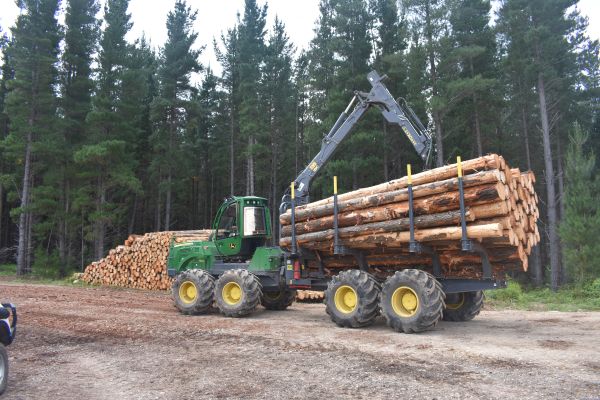
Managing State forests to supply renewable timber is one of our statutory objectives and remains our priority. We will only support renewable energy opportunities that can co-exist with ongoing timber supply. Timber supply and renewable energy will be managed side-by-side.