Harvest Plans
Access harvest plans on our Plan Portal.
Forestry Corporation is currently planning thinning operations in compartments 2312A, 2313A, 2314A and 2315A of Glenbog State Forest. The planning process is still underway and certain habitat searches are yet to be completed.
NSW’s forests are managed through an integrated statewide framework that brings together different laws, agencies and management approaches to achieve long‑term environmental, social and economic outcomes. Through the Regional Forest Agreements between the NSW and Commonwealth Governments, different parts of the forest estate are managed for different purposes based on their conservation values, landscape context and long‑term sustainability.
Most public forest land is managed within national parks and conservation reserves, where conservation is the primary focus. Other areas are managed as State forests under strict environmental rules that require ecologically sustainable forest management including ongoing protection of key environmental values. This approach recognises that forests can deliver a range of outcomes — environmental, social and economic — and that careful, regulated management across the whole landscape is essential to achieving those outcomes over the long term.
A comprehensive regional assessment process was conducted to establish a comprehensive, adequate and representative reserve network statewide.
Glenbog State Forest, like all areas harvested for timber in NSW State forests, is a regrowth forest that has been harvested for timber and regrown many times before and it is classified as a multiple-use public forest that is available for timber production.
Proposed operations in compartments 2312A, 2313A, 2314A and 2315A of Glenbog State Forest are thinning of regrowth from previous operations.
Forestry Corporation must work in line with the robust rules set by the NSW Government in the Coastal Integrated Forestry Operations Approval (CIFOA), which was developed with the input of expert scientists.
A detailed planning process is completed before every operation, which includes environmental and cultural heritage assessments and surveys, and engagement with neighbours and local stakeholders.
During the planning process for compartments 2312A, 2313A, 2314A and 2315A of Glenbog State Forest, Forestry Corporation has met with a range of stakeholders and has incorporated all information provided into its plans.
Once planning has been completed, harvest plans are published on the Plan Portal.
After the harvest plan is finalised, additional detailed ecological searches are completed, called Broad Area Habitat Searches. These searches must be completed immediately before harvesting to identify any additional features and habitat to be set aside. Our coastal operations map provides near-real time information showing exclusion areas as they are established.
The CIFOA was developed with the input of expert panels and includes conditions to protect habitat for Greater Gliders. These include:
The rules require trees with hollows to be identified and protected whether or not Greater Gliders or other hollow using species are seen. In 2024, these conditions were further strengthened to introduce nocturnal survey requirements. The CIFOA sets out when, where and how searches must be conducted and results are incorporated into the harvest plan. Forestry Corporation also considers all information about records available on the NSW BioNet Atlas or submitted by community members.
Once planning has been completed, harvest plans are published on the Plan Portal.
Glider habitat is also searched for in broad area habitat searches to be completed after the harvest plan is finalised and prior to any operations. Our coastal operations map provides near-real time information showing exclusion areas.
Forestry Corporation has worked with neighbours including Jarake Wildlife Sanctuary to establish large exclusion zones where no operations will take place and will also implement guidance for the protection of wombat burrows, which was developed in consultation with the Jarake Wildlife Sanctuary.
Forestry Corporation has incorporated all the records provided by community groups into its draft harvest plan and wombat burrows are also searched for in broad area habitat searches to be completed after the harvest plan is finalised and prior to any operations. Our coastal operations map provides near-real time information showing exclusion areas.
Operations are planned for mid-late 2026. Once planning has been completed, harvest plans and operational dates are published on the Plan Portal.
Access harvest plans on our Plan Portal.
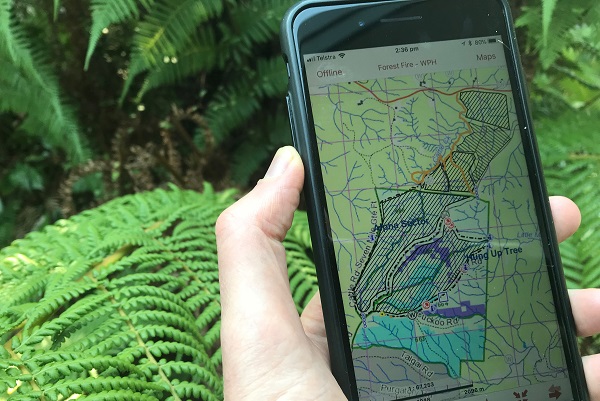
Near real-time data on operational progress.

The native forestry planning process.