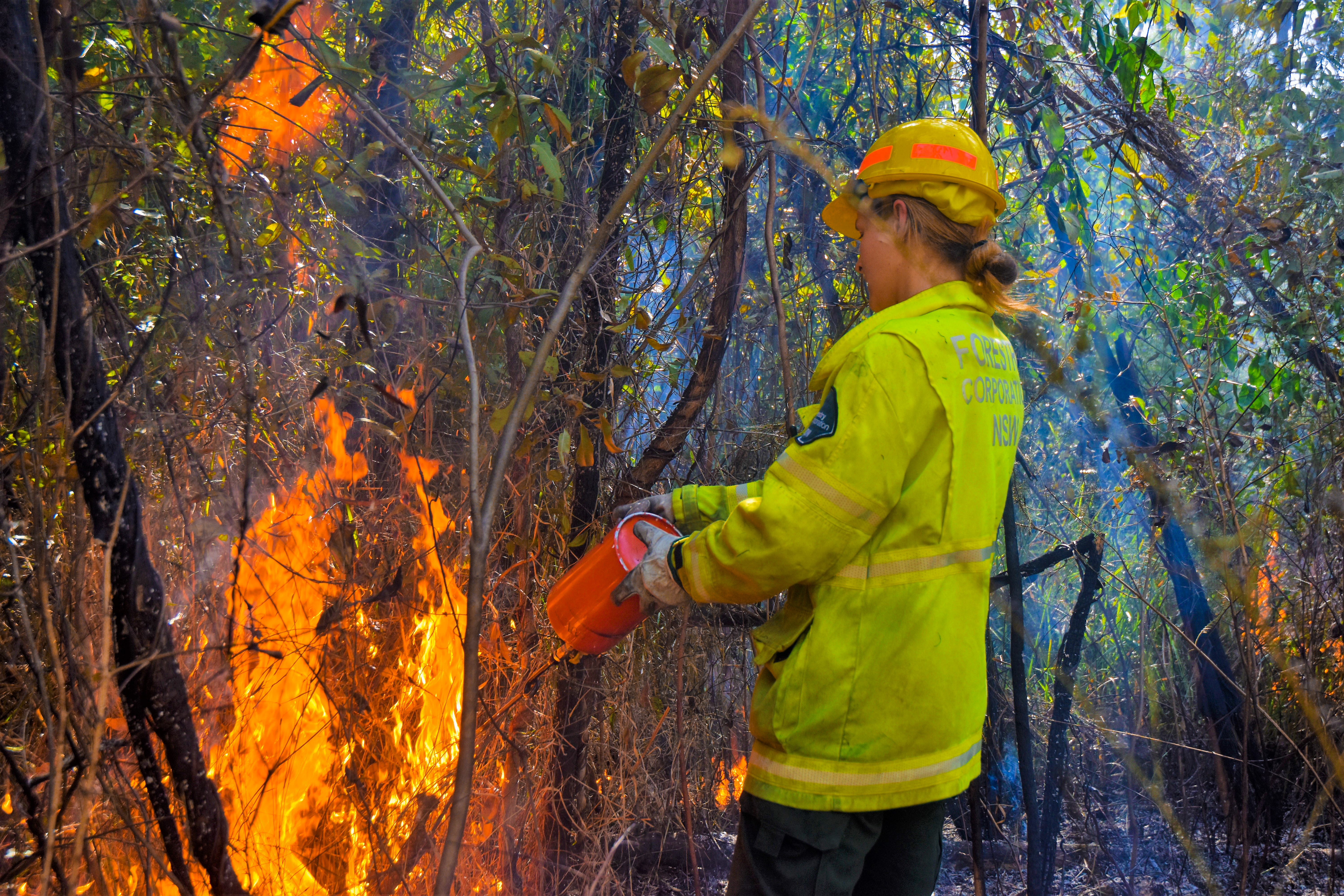
Forestry Corporation is staging a controlled burn in Kiwarrak State Forest, near Taree, to improve habitat for wildlife and protect neighbouring properties ahead of the summer bushfire season.
Seven Forestry Corporation fire crews established containment lines on the 1000-hectare burn near Possum Brush on Friday with internal burning to happen this week.
Senior Field Ecologist Mark Drury said the burn reducing forest fuel loads has been timed with the onset of favourable weather conditions.
“The aim of the burn is to maintain the natural and historic grasses in the forest by burning off the dense shrub understorey, lantana, weeds and vines, which have become really thick after the intense Hillville fire in 2019,” Mr Drury said.
“Cool fires aimed at maintaining grass areas in our forest is essential for wildlife and maintaining the forest in a natural state. Hazard reduction at this time of year also keeps neighbouring property owners and our firefighters safe in respect of future summer bushfires.
“A wet autumn period prevented us from conducting widespread hazard reduction burns, but we now have the perfect window to conduct this burn in mild weather conditions,” he said.
Kiwarrak State Forest was heavily burnt in 2019 during the Black Summer bushfires.
Following the fires, Forestry Corporation in partnership with Local Land Services has monitored wildlife in Kiwarrak State Forest under the Australian Government’s koala conservation and protection program.
This current burn is part of this habitat restoration and monitoring project and follows a burn last year on the Hillville side of the forest to improve habitat.
“Monitoring programs in Kiwarrak State Forest post the bushfires have indicated strong recovery in wildlife populations, including koalas, and this burn is a way of restoring the forest and minimising fuel loads now that the forest is starting to dry out,” Mr Drury said.
“Burning under controlled conditions ensures flame heights remain low, with a mosaic style of burning seeing slow moving flames and low-heat intensity.
“This enables wildlife to safely move out of the path of the flames, which would not be the case in a fast-moving summer bushfire involving extreme heat,” he said.
For the latest information on fire operations across NSW visit the NSW Rural Fire Service website or download the Hazards Near Me app.
To find out more about Forestry Corporation’s fire and ecology operations visit www.forestrycorporation.com.au
Media enquiries