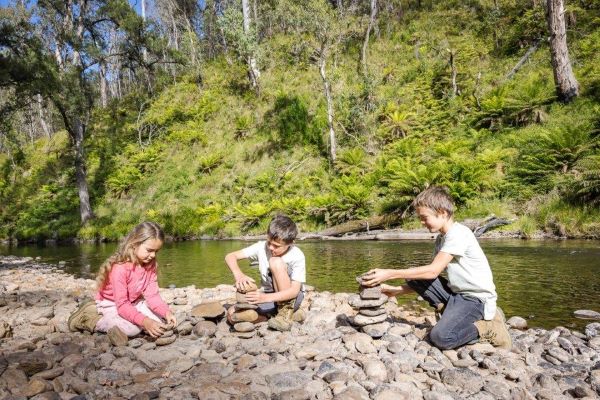
Virtual visitor centre
Check out our virtual visitor centre to get all the tips and advice you need for a safe and enjoyable trip.
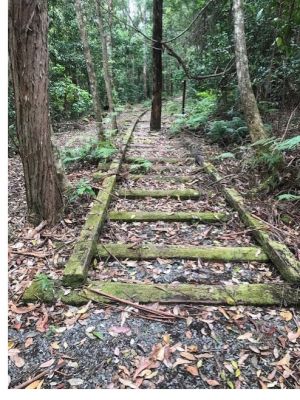
Longworths Tramway Heritage Walk is a 2.1km easy grade, one-way walk that takes visitors along an historic tramline, used for timber haulage since the early 1900s.
It is close to nearby Swans Crossing in adjacent Kerewong State Forest.
The Mid North Coast in the 1850s was a tough place. Many ex-convicts and ticket of leave men came in search of a way to make their fortunes working within the hardwood forests of the area. The forests of the Mid North Coast contained a large variety of timber such as tallowwood, grey ironbark, white mahogany, red mahogany, swamp mahogany, brush box, grey box, red ironbark, turpentine and blackbutt.
These varieties were in great demand for the emerging industry of building railways, bridges, and wharves. Additionally, the lure of the promise of blocks of land through the Settlement Act of 1861 was a drawcard for free settlers, and the timber industry was a way for people to finance their agriculture and dairy businesses.
In the early days of timber getting, felled timber was hauled out of the forest by bullock teams. Punts (or droghers) transported the timber to the mills via waterways, which was then transported out of the area via ship from Laurieton. The very first mill in the area was established in 1875 by Joseph Laurie, followed by the Dunn and Bogan and John Rodger Mills. In 1898 the Concord Mill was established by brothers John and Robert Longworth. This mill was a major supplier to the Sydney market and continued production until its closure in 1957.
As easily accessible timber was depleted, it became necessary for timber getters to go into higher, more rugged country. This meant longer distances to haul logs back to Laurieton for ship departure to Sydney. In 1903, a Parliamentary Standing Committee on Public Works in 1903 determined that rather than shift the mills into the higher country, it would be more practical to build tramways. At the time tramways were already established in Victoria, and so the Longworth brothers decided to build a tramway to meet the high demand for timber supply from the Mid North Coast.
Around the same time, a Royal Commission into Forestry in 1907 led to the formation of a Forestry Department in 1908. The Longworth brothers applied for, and were granted an ‘Occupation Permit’ by this new Forestry Department in 1913, to build a ‘tramway 25 links wide’. A dedicated easement for the tramway, for the transportation of timber, was granted to the Longworths on 21st January 1914, along with dedicating the area the tramway traversed (Forest Reserve 45666) as Kerewong State Forest No. 54.
The Longworths Tramway was 17km long, running from a wharf on the Camden River at Kendall, through to Logans Crossing Road and into private property along an eight-foot-wide ‘right of way’. A river crossing 5 kilometres further west was established at Buctons Bridge, before swinging northwest at Dewdrop log dump, at the junction of Comboyne Road and North Branch Road. The tramway then followed along Upsalls Creek to Tipperary, running through to Cataract Creek reserve. Longworths Tramway was originally designed to enable horse-driven extraction of felled timber from surrounding forests, but horses were later replaced by steam engines in 1916, when the tramway became colloquially known as the ‘Loco Line’.
Today, Longworths Tramway Heritage Walk contains remnants of the original tramway through what is now known as North Branch State Forest. This historic walking track reflects both the history of the area and the ability of forests to regenerate, offering the visitor a peaceful meander through a beautiful native forest environment.
Check out our virtual visitor centre to get all the tips and advice you need for a safe and enjoyable trip.
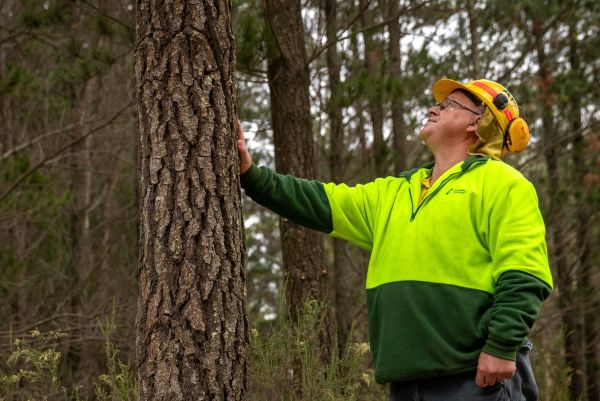
Avoid disappointment and check for current closures and notices before setting out.

Leave only footprints, take only memories. Find out how to minimise the impact of your visit.

The most important part of your trip is arriving home safely. Make sure you read our information on forest tips and staying safe.
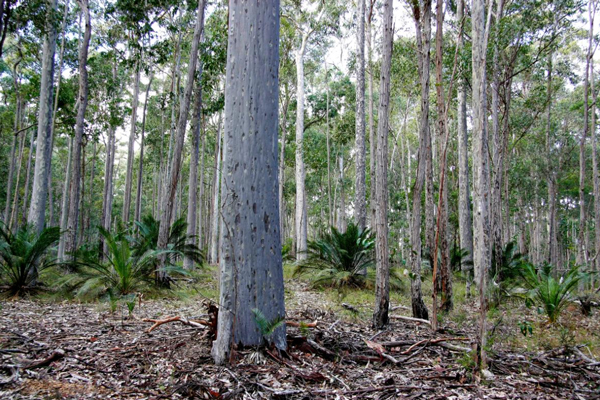
Some State forests are declared for authorised hunting. Find out more about authorised hunting in State forests, including licensing and applying for permits.

This area is designated as ‘high public usage’ under Forestry Corporation of NSW’s Pesticide Use Notification Plan [PDF 3.83 MB].
Want to connect with us on social media? Please follow our channels below for the latest updates on tourism, recreation and industry news.


